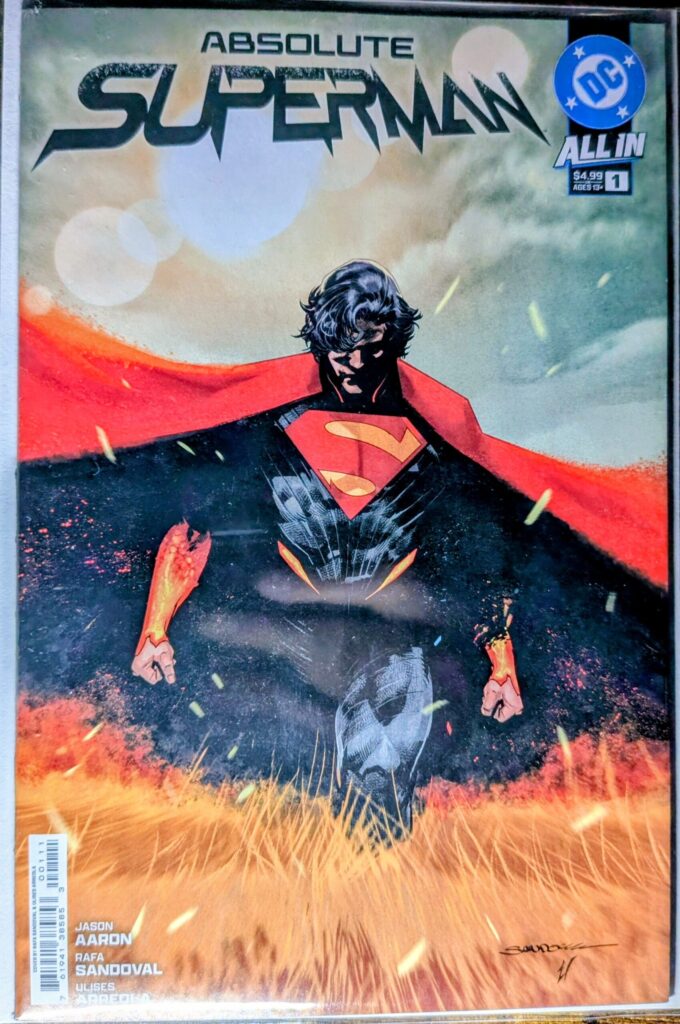
I went back and reread Absolute Superman #1 after issue 20 came out. This one originally released in November 2024, so it’s been about 20 months. With the perspective of where the series has gone so far, I wanted to check how well the foundation holds up.
The tagline is “No Fortress, No Family, Absolute Defender.”
Storytelling and Krypton Backstory
The issue opens on Krypton and stays there for the first section before shifting to present-day Earth. It returns to Krypton flashbacks toward the end of the present-day story. This back-and-forth gives context without feeling scattered.
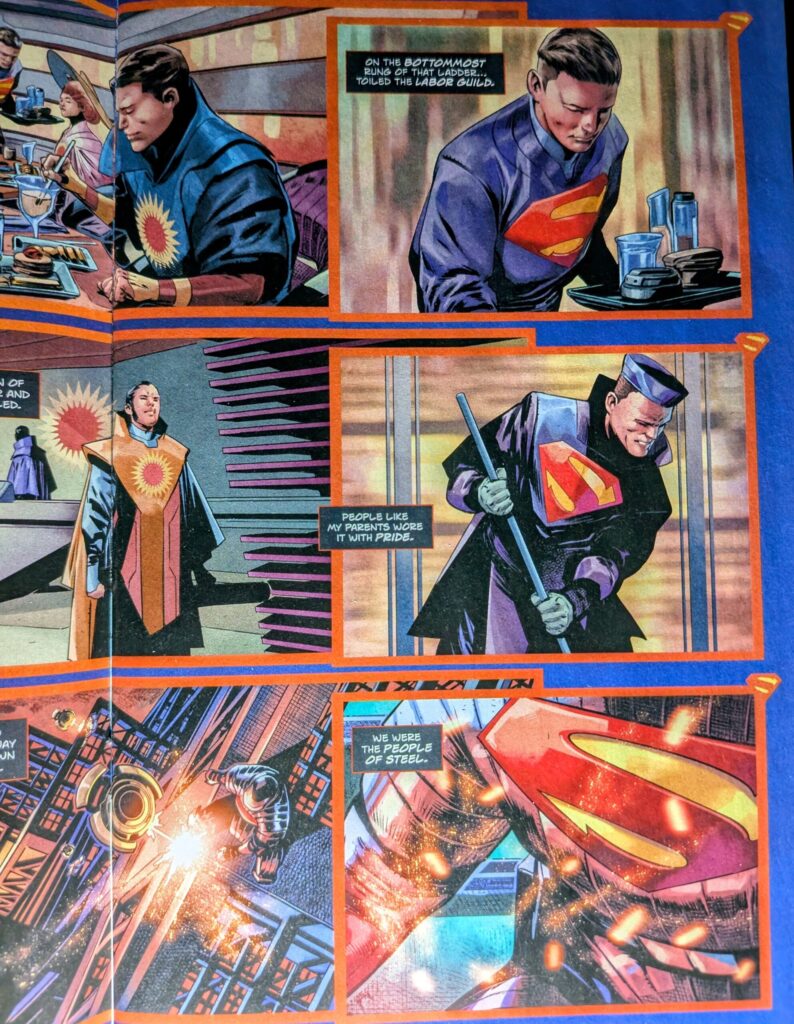
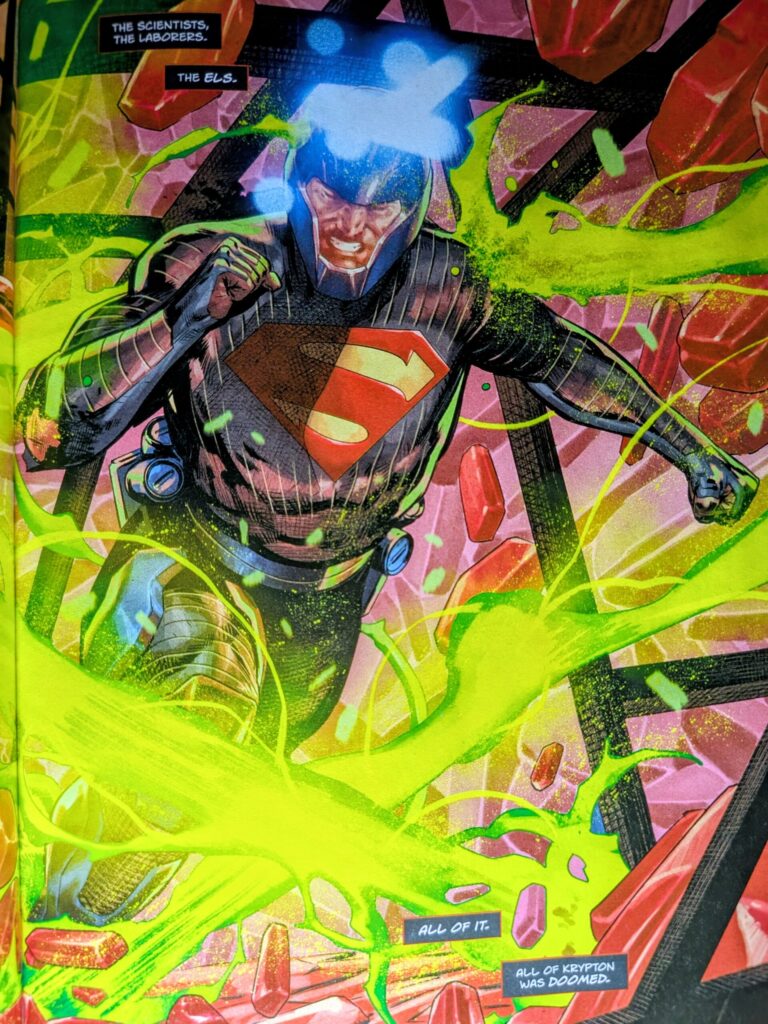
Krypton is a dying planet, but most ‘people’ don’t know (or choose to ignore). Society runs on a strict class system, with the elite Science League at the top and the Labor Guild at the bottom. The Labor Guild wears the iconic S-symbol, referring to themselves as “people of steel.” Jor-El and Lara are both blackballed for speaking out — Lara as a child for an essay criticizing the lack of interstellar exploration funding, and Jor-El later for a graduation speech condemning the Science League’s environmental recklessness.
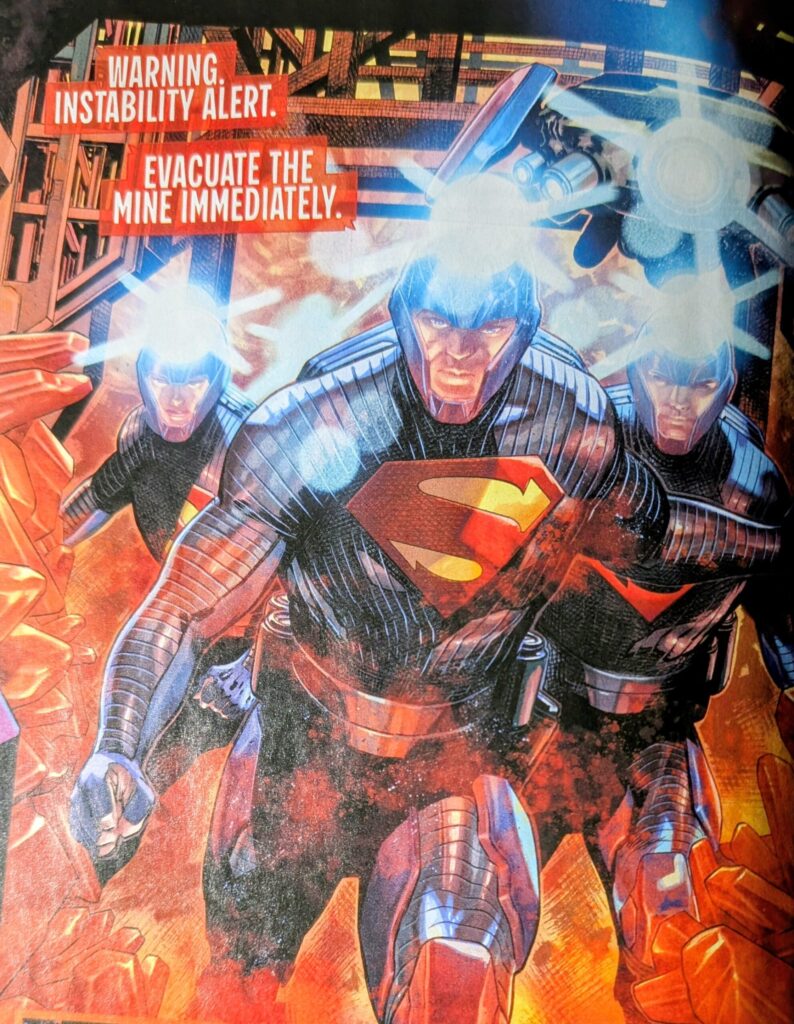
We see Jor-El working at a mine, sensing instability that others ignore, which leads to a dramatic Kryptonite eruption that proves him right and shows the planet is falling apart.
Present Day on Earth and Key Introductions
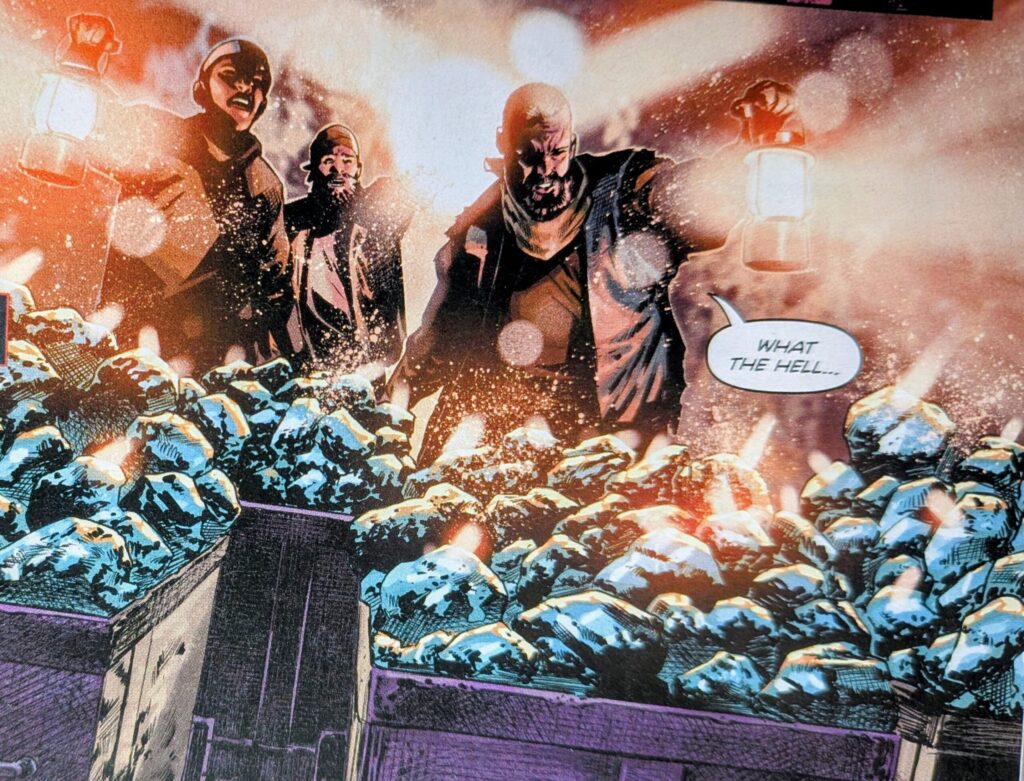
On Earth, we follow Clark Kent? At this point in the story he isn’t really the Clark Kent we traditionally know yet (and for all we know never will be). He’s still very much Kal-El, a stranger on this planet who has been traveling the world helping oppressed workers. In the opening sequence he’s with miners forced to dig through asbestos for the ruthless Lazarus Corp. The company’s peacekeepers keep everyone in line at gunpoint, treating the workers as disposable while raking in massive profits.
Kal-El has been sabotaging these operations and is now actively fighting back. This is where we meet Sol — his living cape and armor made from the sands of Krypton. Sol has its own personality, acts as both protection and companion, and is one of the most distinctive new elements in this version of Superman.
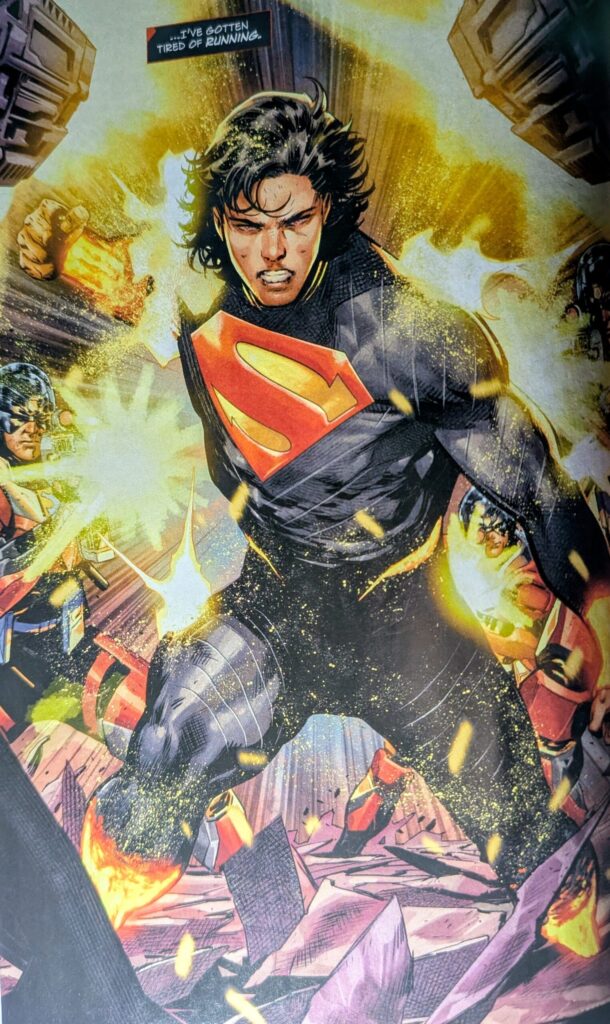
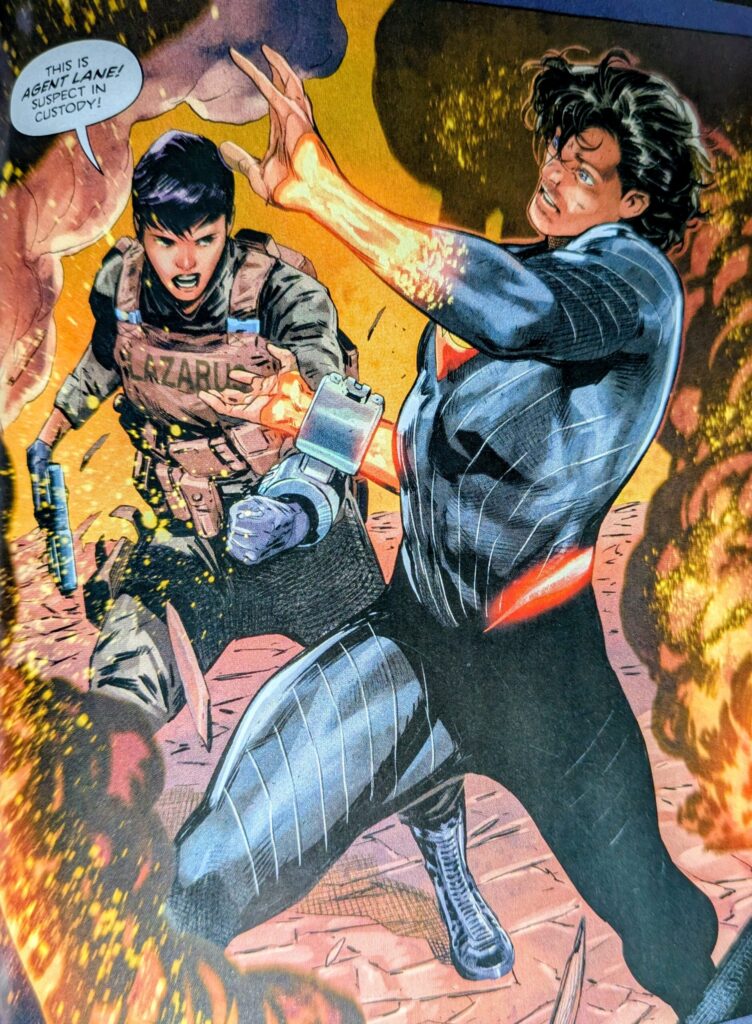
The action ramps up when peacekeepers and a Lazarus strike team come after him. He wrecks vehicles and takes out Reaper drones, though his heat vision is still hard to control (Sol helps him rein it in). Eventually he’s captured by a sharp agent who notices that the suit seems alive and that Kal-El talks to it. That agent is Lois Lane, and this is the first time anyone calls him Superman.
Flashbacks, Teases, and Setup
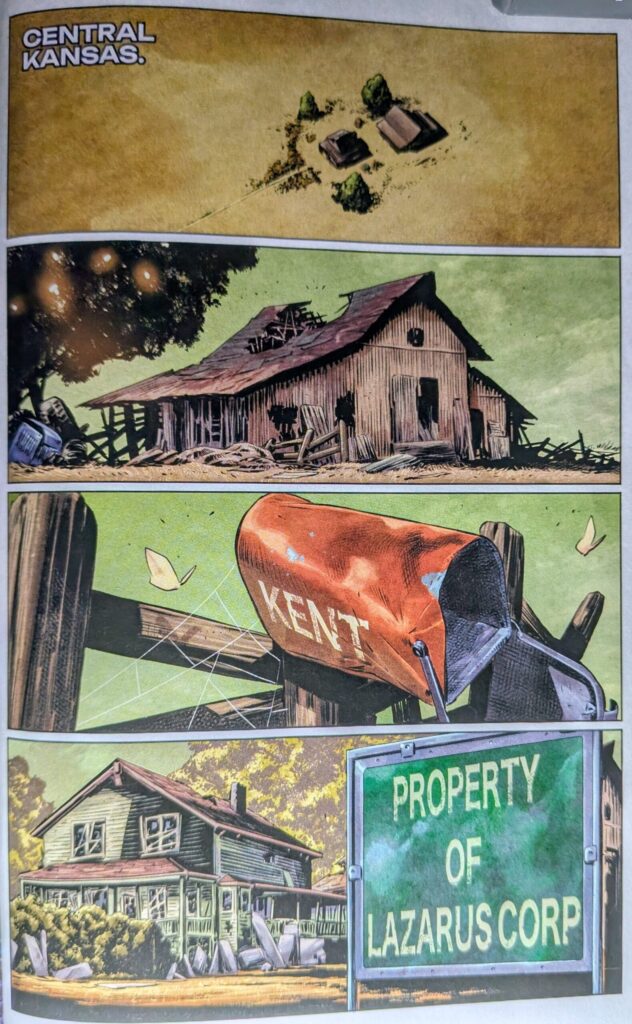
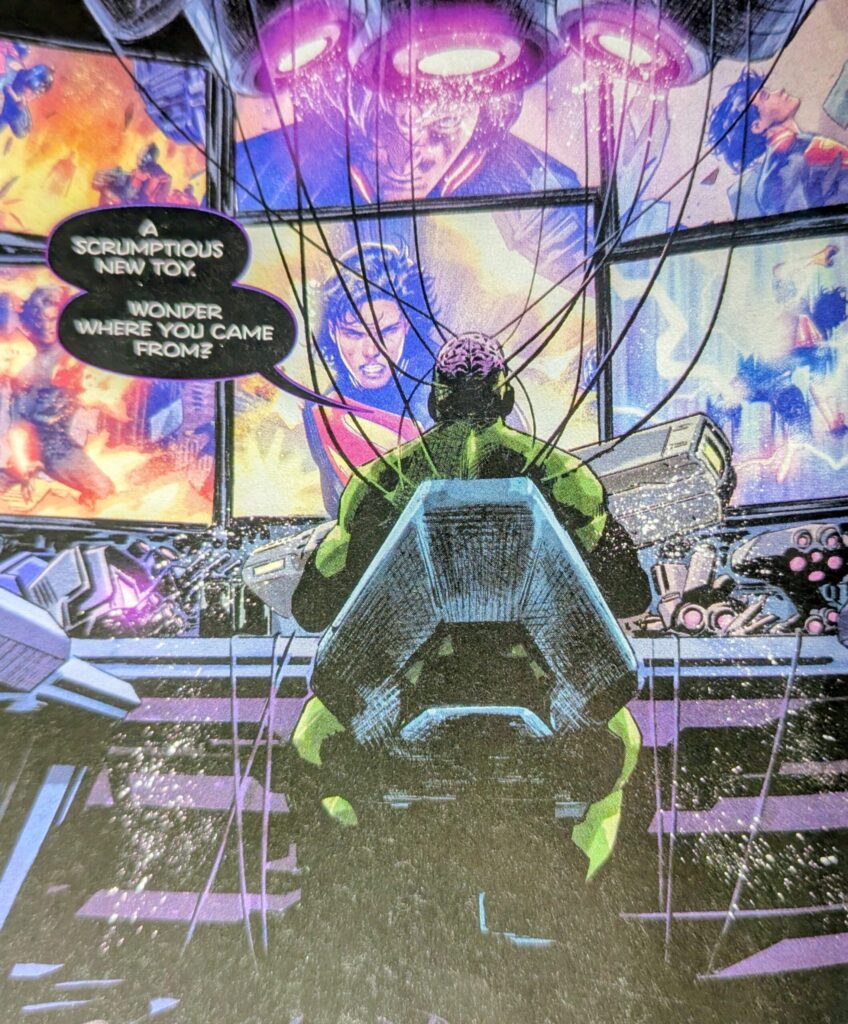
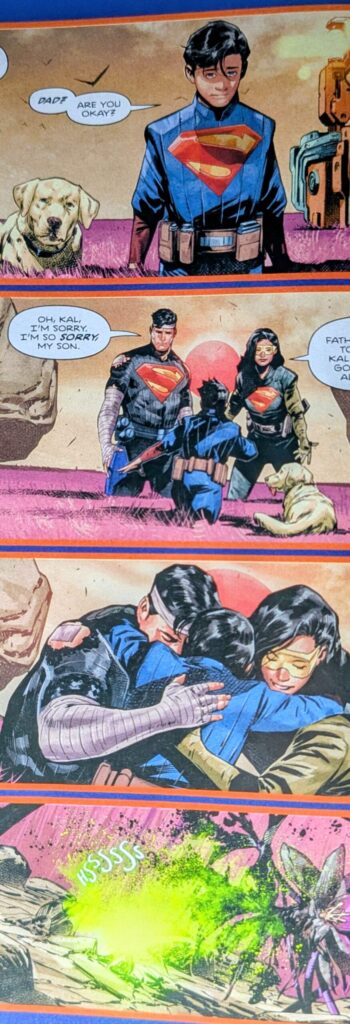
At the end of the present-day section we get flashbacks to young Kal-El on Krypton with his parents and dog Krypto, plus haunting images of Kryptonite mist signaling the planet’s doom. There are also teases like a rundown Kent farm (now owned by Lazarus Corp) and a glimpse of Brainiac watching from the Nevada desert. These moments set up the next issue as a direct confrontation between Superman and Lois Lane.
Highlights
- Sol stands out as a genuinely fresh and cool concept. The living, personality-driven armor made from Krypton’s sands gives Kal-El an interesting companion right from the start.
- The action and visuals are strong, especially the mine sabotage and the escalating fight with the peacekeepers and strike team.
- The Krypton class system and the way Jor-El and Lara are punished for questioning it adds real weight and intrigue to the origin.
- Lois Lane’s introduction and the capture scene is sharp and immediately creates interesting tension.
- The return to Krypton flashbacks at the end of the present-day story gives emotional weight and ties the past directly to what’s happening now.
Reflections After 20 Issues
Compared to Absolute Batman #1, this one feels less immediately grabby. It’s more of a slow burn (the whole series), especially early on. That’s not a deal-breaker, but it does take longer to fully hook you.
The “No Fortress, no family” premise is interesting, but I keep coming back to whether the changes feel as extreme as they could. Sol actually feels like a pretty strong upgrade in some ways — a living, protective presence tied to Krypton rather than an empty fortress. And while Kal-El starts more distrustful and hardened (which fits the “absolute Defender” fighting systemic oppression), by issue 20 it feels like he’s already regained a lot of classic Superman idealism. I kind of wanted the differences to feel more pronounced and take longer to bridge, but the series has still been excellent overall.
One thing I really like about the Absolute approach is how it sets the stage for fresh interactions with familiar characters. Seeing how Kal-El eventually connects with the Kent family in this version should be really interesting, since his background and starting point are so different.
Final Verdict
Absolute Superman #1 is a solid and intriguing foundation. While it takes a little more time to grab you than some of the other Absolute launches, the world-building, the introduction of Sol, and the setup for Kal-El’s conflict with Lois Lane all work well. With the hindsight of 20 issues, it’s clear this was a strong starting point that has supported a great ongoing series.
The Absolute take keeps delivering, and going back to #1 reminds you why it hooked so many readers.
What did you think of Absolute Superman #1 when it first came out, and has your view changed after following the series this far? Tag me on X @NostalgicNestEg!
Protect your comics with bags & boards, top loaders, boxes and more storage supplies from BCW!

Affiliate links are used in this post. I may earn a commission from qualifying purchases—no extra cost to you.